Wines Without Makeup

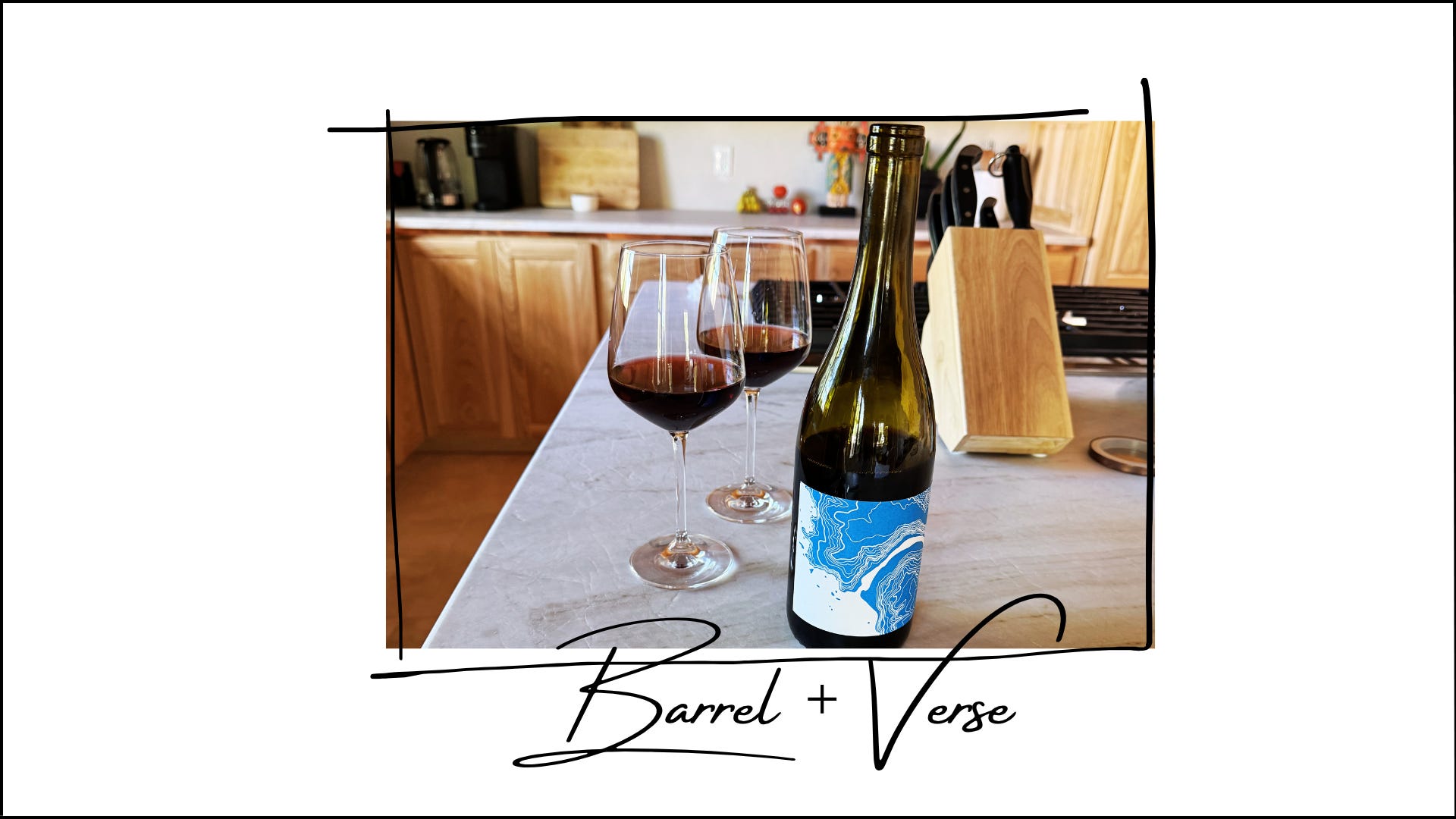
As the sun settled deeper into the afternoon, we opened a bottle of LIOCO and eased out of a long day of work.
Blue contour lines wrapped around the label like an old topographic map, rivers, ridges, elevation marks, all of it reminding me that good wine still begins with the land. The soil. The climate. The vineyard itself. Long before it ever reaches the table. Or in this case, a kitchen counter warm with afternoon sun.
Outside our window, the mountains stretched against a layered blue sky, the dark lines of distant ridges folding into one another like wet brushstrokes across a Georgia O’Keeffe canvas. Everything sharp and clean in the way only western afternoon light can make it. Inside, the wine opened slowly in our glasses while we settled into our chairs and let the day soften around us.
No dinner party. No special occasion. Just me and my beautiful wife talking about the future.
Work mostly at first. The roads ahead of us. Risks worth taking. The strange weight that comes with building things that are meaningful in a climate that seems to reward noise and division more than substance and connection. One of those conversations that starts practical and slowly turns personal, about the value of others, connection, and living a life well spent, without either of us noticing.
That’s the thing about wine when it’s shared openly. When people sit together simply, willing to listen, reflect, and learn something new about each other.
It doesn’t become the center of the moment.
It becomes the weather around it.
And that is exactly the kind of afternoon LIOCO feels built for.
The first thing you notice about their wines is restraint. A difficult thing in California, where winemakers have spent years trying to outshout each other. Chasing Robert Parker scores. Bigger fruit. Bigger oak. Bigger alcohol. Wines polished so heavily they lost their point of view. Lost where they came from and what they were about.
LIOCO chose another direction. One rooted more in character than performance.
Cool-climate vineyards. Coastal fog. Earlier picks. Lower intervention. Wines that wear tension instead of makeup. Wines willing to let you see them as they are. Wines that don’t mask themselves behind oak, manipulation, or heavy filtering.
You feel it immediately in the glass.
The fruit arrives dark but measured, followed by something earthbound underneath it, herbs, stone, stems, a little bitterness like orange peel held over flame. Nothing exaggerated. Nothing begging for approval.
Just expressive enough to keep revealing itself the longer you sit with it.
As the afternoon stretched on, the wine continued opening in new directions. So did we. The conversation drifted from work into dreams. Into fear. Into gratitude. Into the strange miracle of building a life alongside somebody who still surprises you after all the ordinary days and hard seasons.
Outside, the sunlight dragged long shadows down the mountain face.
Inside, the room softened.
There’s a reason wines like this matter to me now more than ever.
We live in an age of enhancement. Filters over faces. Branding over substance. Restaurants built to photograph better than they feed people. Everything optimized until the soul gets sanded clean off it. Strange how wine can mirror culture itself, humility replaced by performance, depth traded for immediacy, honest texture sanded down until everything starts tasting the same.
But LIOCO still tastes like weather. Like difficult soil. Like decisions. Like restraint. Like honesty. Not polished into perfection, just real enough to show its edges.
There’s a trust in wines like this, a belief that vineyards already know how to speak if winemakers stop interrupting long enough to listen. Of course, that path is harder. Riskier. Often uncertain. And in an industry that has long rewarded consistency and conformity over discovery, uncertainty can feel like too great a risk when standing out can cost you.
That philosophy changes the shape of a moment. You stop drinking to be impressed and start drinking to pay attention. To the glass. To the silence between sentences. To the person across from you.
And attention may be the rarest luxury left.
By the time the bottle emptied, the kitchen had gone gold with late light. The mountains outside turned blue-gray at the edges. Two glasses sat with deep crimson tears rolling slowly down the sides while our conversation drifted softer and slower toward evening.
Nothing historic happened that afternoon.
No grand revelation. No dramatic toast. No life-changing moment.
Just two people sitting together under a wide western sky, sharing a bottle of wine that, much like a good relationship, never tried to overwhelm the moment or hide itself behind polish. It opened slowly. Rewarded patience. Made us pay attention. And somewhere in that beautiful afternoon sat the reminder that the best things in life, wine, relationships, conversation, purpose, all deepen when given room to breathe.
Truth is, those are usually the days that stay with you the longest and I am certain this one will for me.